Digital marketing is constantly transforming the way brands connect with their audiences. From the early days of basic SEO to today’s AI-powered strategies, industry trends have continually redefined the rules of the game.
In this guide, we explore the evolution of digital marketing trends from 2020 to 2026. Interestingly, many trends tend to reappear over time—evolving with technological advancements—while others undergo complete transformations and introduce entirely new concepts.
Understanding these shifts helps businesses stay competitive, relevant, and aligned with changing consumer expectations.
What will define digital marketing trends in 2026?
How is digital marketing moving beyond AI in 2026?
By 2025, artificial intelligence had firmly established itself as a core element of digital marketing. From content creation to optimization and analysis, AI reshaped how professionals approached their strategies.
While 2025 was marked by uncertainty and experimentation, digital marketing trends for 2026 point toward a more stable and predictable landscape. Changes in search engines, user behavior, and content consumption are no longer unexpected.
More advanced tools are now available to measure AI’s real impact on campaigns, and marketers have a stronger understanding of how emerging technologies influence user expectations and decision-making.
Below are the key trends shaping digital marketing in 2026.
What is “Total Search” and why does it matter in 2026?
By 2026, users will no longer rely on a single channel to discover brands, products, or information. A clear shift began in 2025 toward using multiple platforms simultaneously and strategically.
Brands must maintain visibility across traditional search engines, AI-powered search tools, social media platforms, Google Maps, Google Lens, email marketing, and paid advertising channels.
Ensuring a consistent brand message across all these touchpoints—and encouraging user interaction—will be critical, especially in an era where non-click searches are becoming more common.
Why are digital marketers going “back to basics”?
At the beginning of 2025, the industry debated GEO versus AEO. Over time, it became clear that optimizing for AI-driven search is essentially an evolution of traditional SEO—focused on Large Language Models (LLMs).
Although AI search tools continue to grow, Google still dominates approximately 90% of the global search market. The introduction of AI Overviews and AI-mode simply expanded how language models appear in search results.
As a result, proven SEO fundamentals are regaining importance in 2026, including:
- Entity-based optimization
- Conversational keywords
- User experience (UX)-focused design
- Backlinks and external mentions
- High-quality, authoritative content
How will intelligent automation change paid advertising?
By 2026, automated advertising campaigns will continue to expand across Google Ads and other PPC platforms.
Campaign types such as Performance Max and AI Search Max allow brands to appear in AI-driven search results for highly specific queries.
Human involvement will focus less on manual bid adjustments and more on translating business goals into AI-friendly inputs, as well as managing creative strategy and messaging.
Why are niche markets becoming more important?
User-generated content remains a key social media trend in 2026, but specialization has become even more critical.
Instead of targeting massive audiences, brands are focusing on users who are genuinely interested in their products and values. Niche content and micro-communities now drive stronger engagement, loyalty, and conversions.
How is AI reshaping eCommerce in 2026?

Consumers increasingly use AI tools to search for products, check availability, and compare prices.
Nearly 25% of ChatGPT users report being willing to use AI agents for online shopping, making AI-powered eCommerce optimization a necessity rather than a trend.
Key success factors include strong organic and paid visibility, AI-readable content structures, authentic reviews on platforms like Google and Reddit, and partnerships with micro-influencers that add human credibility.
What are customized feeds and why do they matter?
By 2025, hyper-personalized search results became a reality. AI chatbots and AI-mode searches now generate results tailored to individual user behavior.
In 2026, building genuine connections with users is a core marketing priority. Co-storytelling allows audiences to actively participate in a brand’s narrative, making content more relevant, emotional, and memorable.
What content trends will dominate in 2026?
- Nostalgia: Retro-inspired campaigns can increase brand identification by up to 20%, with early 2000s aesthetics gaining popularity.
- Small pleasures: Economic uncertainty drives interest in content focused on short-term happiness and emotional comfort.
- Sustainability: Consumers expect measurable, transparent sustainability efforts rather than vague promises.
- Engagement: Brands are empowering users to co-create content through social media and AI tools.
What digital marketing trends defined 2025?
By 2025, digital marketing trends emphasized ethical practices, personalization, and sustainability. Brands were required to adapt to a more transparent and consumer-centric digital environment.
Why did data privacy and ethical marketing become critical?
With regulations like GDPR and similar global laws, brands had to rethink data collection and management. Consumers increasingly favored companies that respected privacy and practiced ethical marketing.
Key strategies included transparent data usage, Consent Management Platforms (CMPs), and tools such as Google Consent Mode to operate effectively in a cookieless environment.
How did AI enhance personalization in 2025?
AI-driven personalization allowed brands to deliver tailored recommendations, chat interactions, and real-time experiences.
Customer Data Platforms (CDPs) became essential for consolidating user data, optimizing ad spend, and creating unified customer profiles.
What role did sustainability and ESG marketing play?
Consumers expected brands to align with environmental, social, and governance (ESG) principles. Sustainable packaging, carbon offsetting, and transparent communication were critical to building trust.
How did social commerce transform eCommerce?
Platforms like Instagram, TikTok, and Pinterest became direct sales channels, significantly shortening the buyer journey.
Social media storefronts, TikTok Shop, and user-generated content played major roles in boosting conversions.
Why was user-generated content so powerful?
Consumers trusted real experiences shared by other users more than brand messaging. Reviews, testimonials, and social posts improved credibility, visibility, and search rankings.
How did digital marketing trends evolve from 2020 to 2024?
What stood out in digital marketing during 2024?
AI adoption, TikTok growth, personalized email marketing, ROI-focused strategies, and UGC defined 2024.
What were the key digital marketing trends in 2023?
Short-form video, ethical marketing, inclusive communication, LinkedIn for B2B, and Generation Z engagement shaped strategies.
How did trends change in 2022?
Virtual and augmented reality, UX optimization, influencer marketing, AI automation, and audio content gained traction.
What defined digital marketing in 2021?
QR codes, voice and visual search, AI adoption, user-generated content, and programmatic advertising laid the foundation for future growth.
What were the dominant digital marketing trends in 2020?
Customer experience, visual content, voice search, high-quality SEO content, and vlogging reshaped brand communication.
Why is digital marketing a constantly evolving ecosystem?
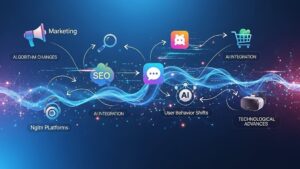
Digital marketing reflects both technological progress and shifting consumer behavior. From early email marketing to today’s hyper-personalized AI experiences, each trend highlights the importance of adaptability.
Brands that stay informed, ethical, and user-focused are best positioned to succeed in this ever-changing digital landscape.
What is the future of digital marketing and why does it matter?
Digital marketing is no longer just a set of tools or tactics—it is a constantly evolving ecosystem shaped by technology, consumer behavior, and ethical expectations. From customer experience and SEO fundamentals to artificial intelligence, automation, and hyper-personalization, each phase of digital marketing reflects how audiences interact with brands in real time.
The evolution from 2020 to 2026 clearly shows that while platforms and technologies change, the core goal remains the same: delivering value, relevance, and trust to users. Brands that succeed are those that adapt without losing sight of transparency, quality content, and meaningful engagement.
Looking ahead, businesses must embrace innovation while maintaining strong foundations in SEO, UX, and ethical marketing. AI, personalization, and community-driven strategies are no longer optional—they are essential for sustainable growth.
Call to Action: If you want your brand to remain competitive in a rapidly changing digital environment, now is the time to audit your strategy, invest in user-centric experiences, and align your marketing efforts with future-ready trends.
Frequently Asked Questions about Digital Marketing Trends
What are digital marketing trends?
Digital marketing trends are emerging strategies, tools, and practices that shape how brands connect with audiences online. These trends reflect changes in technology, consumer behavior, platforms, and regulations.
Why is it important to follow digital marketing trends?
Staying updated with digital marketing trends helps businesses remain competitive, improve customer engagement, and adapt to new platforms and technologies before they become industry standards.
How has artificial intelligence changed digital marketing?
Artificial intelligence has transformed digital marketing through automation, personalization, predictive analytics, and AI-powered content creation. It allows brands to deliver more relevant experiences at scale.
What role does personalization play in modern marketing?
Personalization enables brands to tailor content, offers, and experiences based on user behavior and preferences, increasing engagement, conversions, and customer loyalty.
Are traditional SEO practices still relevant?
Yes. While AI-driven search has evolved, core SEO principles such as quality content, backlinks, entity optimization, and user experience remain fundamental for visibility and rankings.
What is the future of digital marketing and why does it matter?
Digital marketing is no longer just a set of tools or tactics—it is a constantly evolving ecosystem shaped by technology, consumer behavior, and ethical expectations. From customer experience and SEO fundamentals to artificial intelligence, automation, and hyper-personalization, each phase of digital marketing reflects how audiences interact with brands in real time.
The evolution from 2020 to 2026 clearly shows that while platforms and technologies change, the core goal remains the same: delivering value, relevance, and trust to users. Brands that succeed are those that adapt without losing sight of transparency, quality content, and meaningful engagement.
Looking ahead, businesses must embrace innovation while maintaining strong foundations in SEO, UX, and ethical marketing. AI, personalization, and community-driven strategies are no longer optional—they are essential for sustainable growth.
Call to Action: If you want your brand to remain competitive in a rapidly changing digital environment, now is the time to audit your strategy, invest in user-centric experiences, and align your marketing efforts with future-ready trends.