As we tell every new client, everything is connected on the web: social media, search engines, AI, and hundreds of thousands of users who may eventually become customers. Reaching them effectively requires diversification across multiple digital channels.
The use of social media to search for information about products and services is steadily increasing. As a result, relying solely on traditional search engine optimization techniques is no longer sufficient. Social Media SEO has become an essential component of a modern digital strategy.
This shift does not signal the decline of search engines. Instead, it represents an opportunity to improve online visibility and strengthen the ways brands connect with users. Understanding how these channels interact is key to maximizing long-term digital performance.
What Is Social Media SEO?
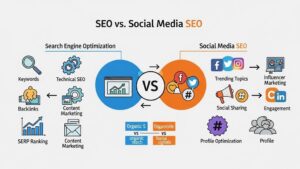
People now spend a significant portion of their time interacting with digital screens. While this creates more opportunities to reach potential customers online, visibility is not guaranteed. This is where SEO (Search Engine Optimization) plays a critical role.
Search engine optimization encompasses a range of techniques designed to improve the organic (unpaid) visibility of a website or digital publication. Beyond visibility, SEO also supports broader digital marketing goals, such as guiding users through the conversion funnel.
As part of an SEO assessment, social media presence is often reviewed alongside website performance. Social platforms can support organic visibility by reinforcing brand signals, increasing content distribution, and driving qualified traffic.
Social Media SEO combines traditional SEO principles with techniques for optimizing social media profiles and content. Each platform favors specific content formats, search behaviors, and audience segments, requiring tailored optimization strategies.
The Relationship Between SEO and Social Media
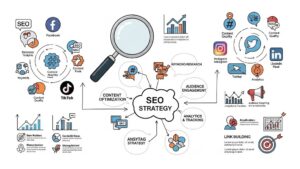
Effective SEO is not limited to traditional search engines such as Google or Bing. It also applies to internal search functions within social networks, content platforms, and other digital ecosystems.
Search engines index both websites and social media pages, meaning that brand-related content remains discoverable across the web. Maintaining consistent optimization across platforms helps reinforce brand authority and clarity.
Social media platforms differ from standard websites in how users interact with content. Engagement metrics such as follows, shares, comments, and content formats introduce additional layers of visibility and discovery.
Does Social Media Affect SEO?
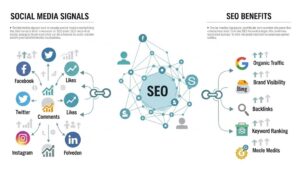
Historically, social signals had a more direct influence on search rankings. Today, Bing acknowledges that social signals may influence results, while Google treats social media pages similarly to standard websites.
For Google, social media does not directly determine ranking positions. However, it affects SEO indirectly by increasing brand trust, visibility, and web traffic.
A 2018 Hootsuite study identified a positive correlation between social media engagement levels and higher search engine rankings. While correlation does not imply causation, the findings support the idea that active social engagement contributes to stronger digital signals.
Impact of Social Media on SEO
Increased Organic Traffic Through Social Media
Social media influences search performance indirectly because platforms generate visibility and engagement rather than acting as ranking factors themselves.
By improving a website’s overall digital presence, social media can increase organic traffic—visits generated through unpaid search results. This traffic is particularly valuable because it often comes from users already interested in the brand or topic.
- Profile links and shared content can direct users to a website.
- Increased brand familiarity encourages branded searches.
- Engagement and mentions contribute to perceived credibility and relevance.
Effective SEO Strategies on Social Media
SEO Strategy on Social Media
Defining the target audience is a foundational step. Platform selection should align with both audience behavior and content format suitability.
Establishing measurable goals and identifying key performance indicators (KPIs) allows performance to be evaluated objectively.
- Number of followers
- Engagement levels (likes, comments, shares)
- Impressions and reach
- Click-through rates
- Brand mentions
Social Media Profile Optimization for SEO

Profile optimization is a core component of Social Media SEO. Profiles should be easy to find and clearly communicate the brand’s focus.
Including relevant keywords in usernames and descriptions improves discoverability both within platforms and in external search results.
Although social links are typically no-follow, they still generate traffic and support broader SEO signals.
Creating Content That Boosts SEO
High-quality content that encourages interaction is central to Social Media SEO. Visually engaging and informative content is more likely to be shared and referenced.
Evergreen content often provides greater long-term SEO value than trend-based posts alone.
Network-by-Network Strategies
- Instagram: Supports brand discovery through visual content.
- Facebook: Enables organic optimization via links and groups.
- TikTok: Offers high reach through trends and short-form video.
- X: Effective for timely updates and discussions.
- YouTube: Strong internal search visibility through optimization.
- LinkedIn: Supports professional authority building.
- Pinterest: Drives traffic through optimized pins.
Common Mistakes in Social Media SEO
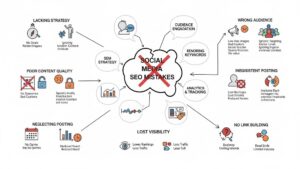
Not Optimizing Descriptions and Links
Failing to include keywords or updated links reduces discoverability and referral traffic.
Publishing Duplicate Content
Posting identical content across platforms ignores audience differences and may reduce engagement.
Errors by Omission
Neglecting metrics, interaction, or calls to action weakens overall performance.
Tools for Managing Social Media SEO
- BuzzSumo
- Sprout Social
- SEMrush Social Media Toolkit
- Later
Frequently Asked Questions (FAQs)
What is the main goal of Social Media SEO?
The primary goal of Social Media SEO is to improve online visibility and support organic search performance by leveraging social platforms to distribute content, build trust, and drive qualified traffic.
Does posting on social media directly improve Google rankings?
No. Google does not use social signals as direct ranking factors. However, social media contributes indirectly by increasing engagement, traffic, and brand awareness.
Which social media platform is best for SEO?
There is no single best platform. Effectiveness depends on the target audience, content type, and business objectives.
How often should social media profiles be optimized?
Profiles should be reviewed regularly, especially when business offerings, keywords, or campaign goals change.
Related Topics: What Is the Evolution of Digital Marketing from 2020 to 2026?
Conclusion: The Value of Social Media SEO in a Digital Strategy
Social media is an integral part of how users discover and evaluate brands. While it does not replace traditional SEO, it complements it by expanding reach, reinforcing trust, and supporting long-term organic growth.
A well-structured Social Media SEO strategy aligns content, profiles, and engagement across platforms, ensuring that brands remain visible, relevant, and competitive in an increasingly interconnected digital ecosystem.